
How to Identify Your IBM / Toshiba POS Terminal Model — A Decoder for the 4810, 4820, 4838, 4840, 4852, 4900 and 6140 Families
Decode the 4-digit machine type + suffix on your IBM SurePOS / Toshiba TCx terminal, locate the physical label, and cross-reference the result to the right replacement parts. Field reference, not vendor brochure.
Why the model number is the part-search starting point
We process about 60 procurement enquiries a week. Roughly one in three arrives with the wrong machine type — "IBM 4810" instead of the specific 4810-340, "Toshiba TCxWave" with no variant, or a 12-year-old support sticker reading 4694-247 for a system that was actually swapped to a 4900-786 three years ago. Each mismatch costs the buyer a return-shipping cycle. This guide is the field reference that ends those mismatches.
The model number does three jobs at once: it identifies the cabinet, the year of manufacture (roughly), and the peripheral interface generation. Once you have it, every replacement part lookup — power supply FRU, riser card revision, thermal printhead resistance — falls into place. Without it, you're guessing.
The 4-digit machine type + suffix naming convention
Both IBM (1973–2012) and Toshiba TGCS (2012–present) use the same underlying naming scheme on retail POS hardware. It looks like this:
↑ machine type ↑ suffix
The 4-digit machine type is the broad family:
4610— SureMark / TCx receipt & document printers (separate from the POS terminal itself)4810— SurePOS 300 class (low-cost retail register, 2003–2012)4820— SurePoint touch displays & integrated touch POS4830— POS keyboards (e.g.4830-T01ANPOS)4838— SurePOS 100 / 300-V (compact mid-class)4840— SurePOS 500 (mid-class)4852— SurePOS 500 / TCx 500 next-gen (touch all-in-one)4900— SurePOS 700 / TCx 700 (enterprise flagship)6140— TCxWave (all-in-one with curved bezel, 2014-present)
The suffix narrows the family down to one specific configuration: processor generation, power supply rating, expansion-slot layout, and peripheral interface set. Two terminals sharing a machine type but with different suffixes can have completely different mainboards.
Where the model label actually lives — by chassis
Every IBM/Toshiba retail terminal ships with at least one factory label. The label has held the same six elements since 1996: machine type, model suffix, serial number, FRU of the chassis itself, MAC address, and a barcode of all of the above. Where you find the label depends on the chassis:
| Family | Primary label location | |
|---|---|---|
| 4810-31x / 32x / 33x | Right side panel, near the rear I/O cluster | — |
| 4810-340 / E40 | Rear of chassis, above the power inlet | — |
| 4810-350 / 370 / E70 | Top of chassis, behind the lift-up service hatch | — |
| 4820 SurePoint (touch display) | Rear of head unit, behind the cable cover | — |
| 4838 / 4840 / 4852 | Bottom of chassis when unit is laid on its back | — |
| 4900-7xx / 8xx | Right side panel, sometimes also on the rear I/O shield | — |
| 6140 TCxWave (all-in-one) | Behind the rear plastic shroud — pop the cover with a finger nail at the top edge | — |
Family catalog: 4810, 4820, 4830, 4838, 4840, 4852, 4900, 6140
Below is the working catalog we use internally to map machine types to part categories. Treat the years as approximate — Toshiba extended support on most platforms 3–5 years past initial end-of-marketing.
| Family | Class | Years | Class peripherals | |
|---|---|---|---|---|
| 4810-31x → 33x | SurePOS 300 | 2003–2010 | Powered USB v1 | — |
| 4810-340 / E40 | SurePOS 300 | 2008–2014 | Powered USB v2 | — |
| 4810-350 / 370 | SurePOS 300-V | 2010–2016 | Powered USB v2 | — |
| 4820-21G / 51G | SurePoint touch | 2008–2018 | Powered USB | — |
| 4838-330 / 540 | SurePOS 100/300-V | 2010–2016 | Powered USB v2 | — |
| 4840-544 / 561 / 563 | SurePOS 500 | 2003–2012 | Powered USB v1 | — |
| 4852-526 / 566 / 570 | SurePOS 500 / TCx 500 | 2011–2020 | Powered USB v2 | — |
| 4900-742 / 743 / 745 | SurePOS 700 / TCx 700 | 2010–2018 | Powered USB v2 / USB 3.0 | — |
| 4900-785 / 786 / C86 | TCx 700-C | 2014–present | USB 3.0 / Powered USB | — |
| 6140-14C / 18C / E3R | TCxWave all-in-one | 2014–present | USB 3.0 / Powered USB | — |
Decoding the suffix: what 'E40', '5LG', '14C', '2NR' actually mean
The suffix letter sequence isn't random — it encodes specific configuration axes. The convention shifted slightly between the IBM and Toshiba eras, but the underlying mapping is consistent:
| Suffix pattern | Meaning | Example | |
|---|---|---|---|
| Single digit (1, 2, 3) | Power-supply generation | 4900-712 vs 4900-722 — same chassis, different PSU | — |
| Trailing letter E | Eco / Energy-efficient revision | 4810-E40 = ACBEL 230 W upgrade on 4810-340 | — |
| Trailing letter X | Extended / Expanded I/O revision | (historical, rarely seen on current stock) | — |
| 5xx | SurePOS 500 mid-class | 4840-561, 4852-570 | — |
| 7xx / 8xx | SurePOS 700 / TCx 700 flagship | 4900-742, 4900-786 | — |
| Letter + LG | LCD Graphics — SurePoint touch | 4820-5LG = SurePoint 15-inch capacitive | — |
| Letter + xR / xC | IBM SureMark printer model — R=receipt, C=cheque/document | 4610-2CR = 2NR refresh + document slip | — |
| Letter + xN / xT | IBM SureMark printer — N=non-printing slip, T=thermal | 4610-1NR (1-station receipt) | — |
| 14C / 18C | TCxWave display size — 14-inch / 18.5-inch | 6140-14C, 6140-18C | — |
| E3R | TCxWave Edge 3rd-gen Retail (current shipping config) | 6140-E3R | — |
| TF6 / TM6 / TG4 / TI4 | IBM 4610 printhead/cutter generation | TF6 = thermal Friction 6th gen | — |
| 1NR / 2NR / 2CR | IBM 4610 station count + cheque support | 1-station receipt / 2-station / 2-station with cheque | — |
IBM → Toshiba 2012 transition: why both names live on
On August 16, 2012, Toshiba TEC acquired IBM's Retail Store Solutions business for $850 million. The deal transferred IBM's POS hardware portfolio — SurePOS, SureMark, SurePoint — and the 4690 operating system to Toshiba, which folded them into a new subsidiary, Toshiba Global Commerce Solutions (TGCS).
For the next 3–5 years, Toshiba continued shipping the same chassis with IBM-branded labels under a transitional licensing agreement. During this period a 4900-786 leaving the factory could carry either IBM or Toshiba branding depending on the buyer's contract — but the hardware is identical. By 2018 Toshiba completed the rebrand, renaming the SurePOS line to TCx (SurePOS 700 → TCx 700, SurePOS 500 → TCx 500), introducing the all-new TCxWave 6140 line, and retiring the IBM brand from new production.
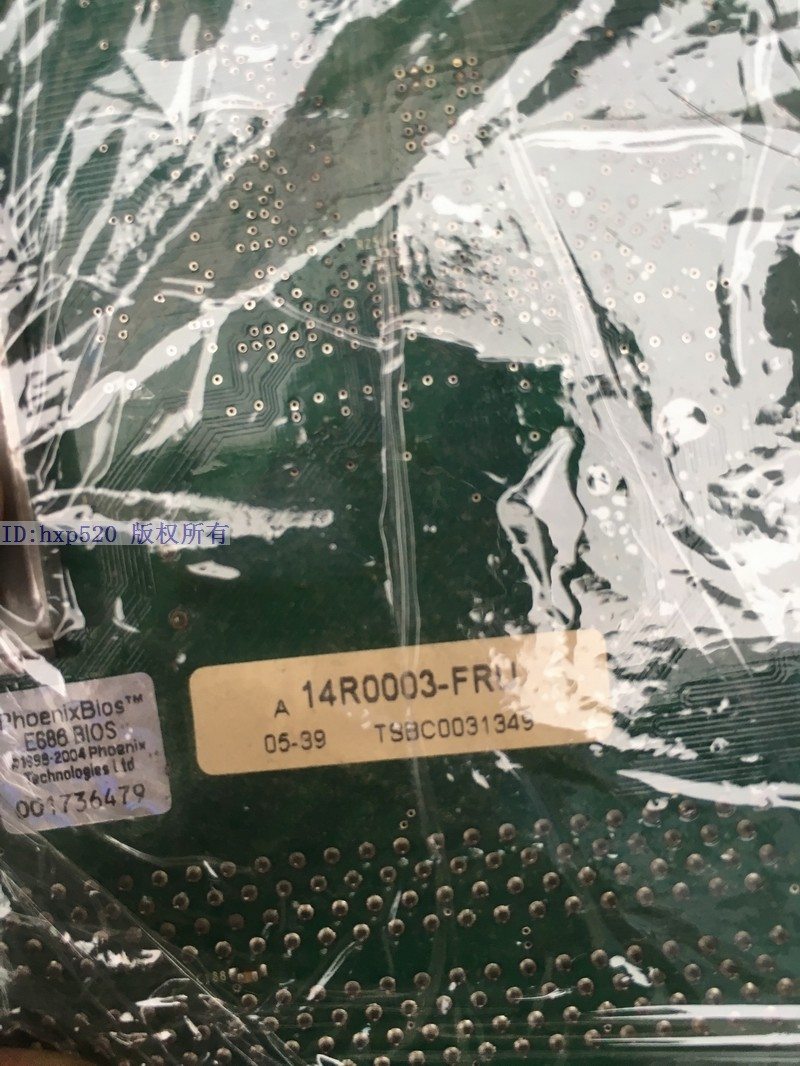
The handful of exceptions: anything with a 7- or 8-character TGCS-era part number that starts with 00V, 54Y or 95Y is Toshiba-era stock (after 2014). Anything starting with 14R, 40N, 41J, 42M or 44V is IBM-era stock (2008–2014). Parts are forward- and backward-compatible at the chassis level.
Machine Type vs FRU vs P/N — three different numbers, one cabinet
The three-number system is the biggest source of confusion for first-time procurement. Each number identifies a different thing:
| Number type | Identifies | Format | Example | |
|---|---|---|---|---|
| Machine Type (MT) | The chassis family (cabinet) | 4 digits + 3-char suffix | 4900-786 | — |
| Type / Model (M/T-M) | A specific configuration of that chassis | 4 + 3 (same as MT) | 4900-786 | — |
| FRU (Field Replaceable Unit) | A single internal part inside the chassis | 5–7 chars alphanumeric | 44V2031 = ACBEL 230 W PSU | — |
| P/N (Part Number) | Variant of FRU — same part, different sourcing batch | P/N often = FRU; can differ for refurb stock | PN42V3935 = SurePOS 500 tailgate | — |
| S/N (Serial Number) | One specific unit's identity | 10–12 chars alphanumeric | 78-CTAJX | — |
- 1
Identify the failing component on the chassis
Don't start with the symptom — start with the part. Receipt printer faded? You need a thermal printhead, not a printer. Drawer won't open? You need a cable or solenoid, not a drawer. Naming the component narrows the FRU search by an order of magnitude. - 2
Read its FRU sticker (back, top, or inside cover)
Every internal part carries its own FRU number on a screen-printed sticker. Power supplies: on the metal case, top side. Mainboards: on the SATA-port edge. Riser cards: on the PCB silkscreen near the bracket. Photograph it.Caution: Don't trust the FRU printed on the original packaging — packaging gets reused. Read it off the part itself. - 3
Cross-reference FRU against the machine type to confirm compatibility
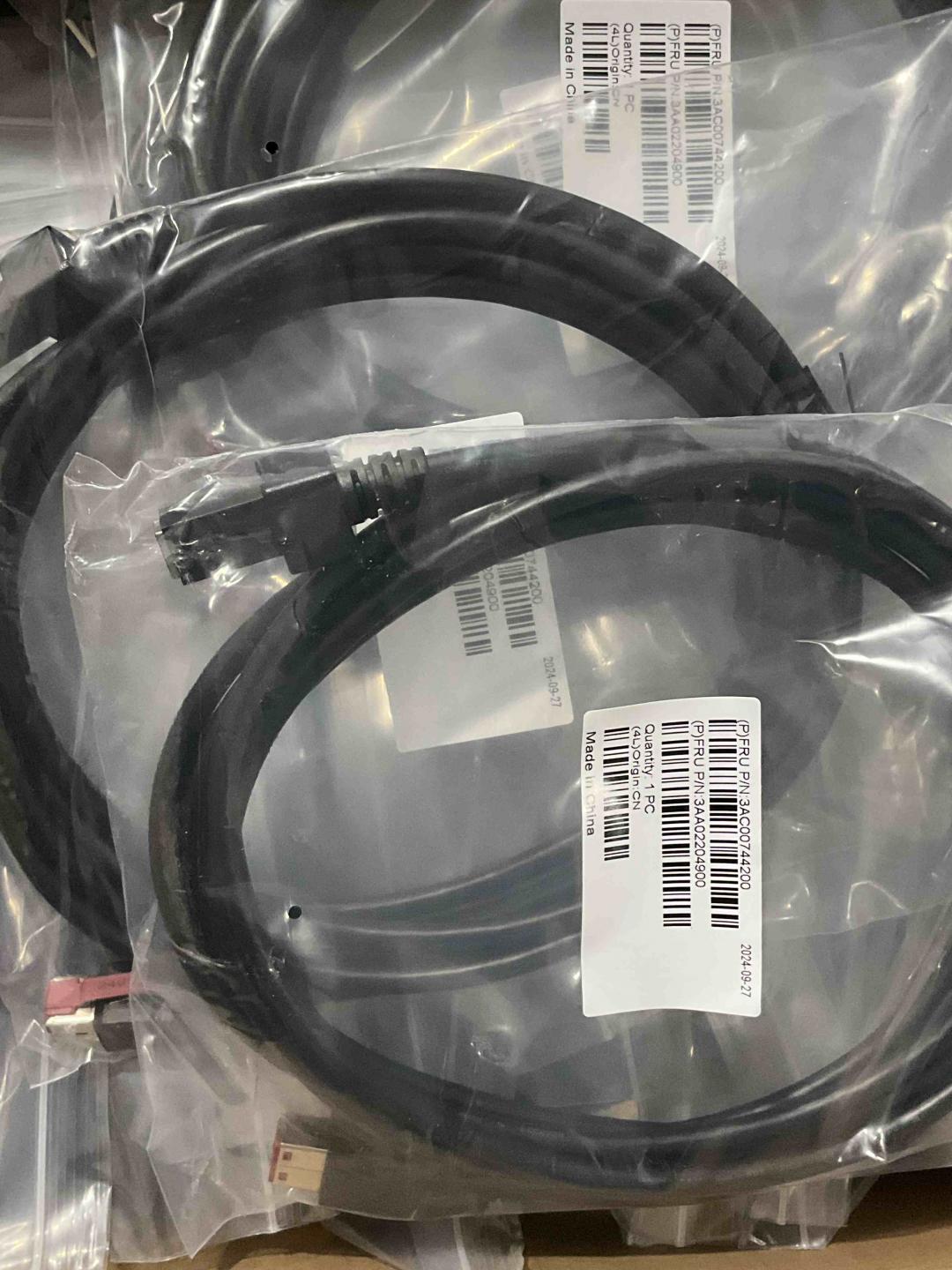
A 44V2031 power supply fits both 4810-340 and 4810-E40, but a 99Y3273 PSU only fits 4900-785 and later. Quote both machine type and FRU when checking with a supplier. - 4
Match against supplier stock by FRU first, P/N second
FRU is the unambiguous identifier. P/N (part number) sometimes carries refurb-batch suffixes that look different but represent the same physical part. If you see a stock listing with an FRU match but a P/N you don't recognize, ask the supplier for a photograph of the part's sticker. - 5
Confirm the replacement matches: voltage, connector, firmware
Especially relevant for power supplies (24 V Powered-USB families changed between 4810-340 and 4810-E40), riser cards (Sparta v1 vs v2.1 use different bracket mounting), and mainboards (BIOS revisions tied to specific Toshiba TCx firmware).
Practical decoder: model number → parts catalog
Once you have a machine type and a symptom, the part falls into one of nine standard categories. The table below maps the most common failures to the part family you need to order:
| Symptom | Most likely part family | |
|---|---|---|
| Won't power on, no LEDs | Power supply (FRU starting with 44V / 99Y / 57P / DPS-) | — |
| POSTs but won't load OS | Storage drive / mainboard | — |
| Black screen, fans spin | Display, display cable, or backlight inverter | — |
| Faded receipts | Thermal printhead — see Guide A | — |
| Random typing on keyboard | Keyboard membrane / circuit film | — |
| Drawer won't open on cue | Drawer cable / solenoid (K-series for Wincor; 46N4329 for IBM) | — |
| Customer display blank | VFD or LCD display module, or Powered USB cable | — |
| Card swipe failures | MSR head / card reader assembly | — |
| USB ports dead | Riser / IO card / tailgate assembly | — |
Verified the model. What now?
Two follow-ups, in order:
- Take photos of every label on the chassis before disassembly. The outer machine-type label, the inner FRU sticker, the power supply FRU, the riser card FRU. Save them in your ticketing system. Future maintenance becomes 10× faster when this data is on file.
- Pull the part you need from a supplier with the FRU quoted on the listing. Generic descriptions ("IBM 4900 power supply") won't cut it — that term matches six different FRUs across the 4900 family. Match the FRU number digit-for-digit.
Frequently Asked Questions
I cannot find the model label anywhere — what now?
What's the actual difference between an IBM 4810-340 and an IBM 4810-E40?
Is 'IBM 4900' the same product as 'Toshiba 4900'?
Can I upgrade an old IBM 4810 to a 4900?
What does 'TCxWave' mean in Toshiba 6140?
Why do some terminals have FRU codes that don't match the machine type?
Does Toshiba still support the IBM-branded SurePOS 4900?
Sources & further reading
- TCx® 700 & SurePOS 700 Support — Toshiba Commerce — Toshiba Global Commerce Solutions
- SureMark 4610 Models 2CR / 2NR User's Guide (GA27-5003) — IBM Public DHE
- 4690 Operating System — Wikipedia — Wikipedia
- Toshiba Global Commerce Solutions SureMark 4610 Hardware Guide (Models 2xR) — Toshiba TGCS
- IBM SurePOS 4810-32x / 33x / E40 Hardware Service Manual — ManualsLib (mirrored from IBM)
Related guides
All-in-One vs Modular POS Terminals: Which to Buy (and How Each Affects Repairs)
All-in-one is tidy and fast to deploy; modular is flexible and cheaper to upgrade and repair. The right answer depends on your size, growth plans — and how you want failures handled. Here's the honest comparison.
Read guide →Barcode Scanner Buying Guide: 1D Laser vs 2D Imager, Corded vs Wireless, Handheld vs Hands-Free
Two questions decide most of it: do you need to scan phone screens (then 2D), and is your counter busy enough to want hands-free? Here's how scanner technology, form factor and connection map to real retail use.
Read guide →Receipt Printer Auto-Cutters: Guillotine vs Rotary, Partial vs Full Cut, and Blade Life
Guillotine or rotary? Partial or full cut? The cutter is the most-used moving part in a receipt printer — choosing the right type and cut mode keeps the lane fast and the receipts tidy. Here's how they differ.
Read guide →Related categories
Featured parts in this guide

Need the parts mentioned in this guide?
Genuine OEM and quality-tested aftermarket parts for IBM, Toshiba, NCR, Diebold, Wincor and Hyosung systems — with worldwide shipping.