
POS Card Reader Won't Read Swipes? Cleaning, Troubleshooting and Replacing the MSR
A practical guide to a magnetic-stripe card reader that won't read — how an MSR works, the correct way to clean the read head, isolating a bad card from a bad reader from a host issue, and matching a replacement by interface and tracks.
The fast triage
A card reader that suddenly stops reading swipes rarely needs replacing. In the field, the order of likelihood is almost always: a dirty read head first, a worn or demagnetized card second, swipe technique third, and an actual reader failure a distant fourth. Two cheap tests resolve most calls before you order anything:
| Do this | What it rules out | |
|---|---|---|
| 1. Clean the slot (cleaning card or IPA + microfiber) | A dirty read head — the #1 cause of swipe failures | — |
| 2. Try 2–3 known-good cards | A single demagnetized or scratched card | — |
| 3. Swipe slowly, stripe facing the head | Too-fast, partial or wrong-orientation swipes | — |
| 4. Reseat USB / restart the terminal | A loose connection or stale USB session | — |
| 5. Cross-test, then replace | Confirms the reader itself is the fault before you buy | — |
How a magnetic-stripe reader works
A magnetic-stripe reader (MSR) is simple: as the card’s stripe slides past a tiny magnetic read head, the head detects the flipping magnetic fields encoded on the stripe and converts them to data. The stripe holds up to three parallel tracks, and most POS transactions read tracks 1 and 2.
Because reading depends on physical contact between stripe and head, two things dominate failures: anything that blocks that contact (dirt, lint, grime on the head) and anything that weakens the signal (a worn, scratched or demagnetized stripe). That’s why cleaning and a known-good card resolve the overwhelming majority of swipe problems.
Reading the symptom
The pattern of failure points to the cause. Match yours before reaching for a tool:
| Symptom | Most likely cause | |
|---|---|---|
| No cards read at all | Dirty head, loose USB, or failed reader | — |
| Some cards read, others don't | Worn/demagnetized cards (not the reader) | — |
| Reads only on slow, careful swipes | Head wear or build-up — clean, then watch the trend | — |
| LED reacts but POS shows nothing | USB/HID config or the POS field isn't focused | — |
| Intermittent / drops out | Loose connector or failing reader electronics | — |
| Customer chip cards 'fail' | Chip card swiped instead of inserted — not an MSR fault | — |
Cleaning the read head the right way
Cleaning is the highest-yield fix, but only if done correctly — the wrong materials make things worse. Follow this exactly:
- 1
Use the right material
A purpose-made cleaning card, or a lint-free microfiber cloth lightly dampened with isopropyl alcohol. Nothing else touches the slot.Caution: Never use paper towel, tissue or ordinary cloth — they shed lint that builds up on the head and causes failures. - 2
Pass through in one direction
Insert the cleaning card or fold the cloth thin, and draw it slowly and fully through the swipe slot in one direction. - 3
Repeat in the opposite direction
Pull it back through the other way. Repeat a few passes until it comes out clean. Let any alcohol flash off before swiping a real card. - 4
Re-test with a known-good card
Swipe two or three good cards smoothly. If they read, you’re done — and you’ve just learned the cleaning interval this site needs.
Isolate: bad card, bad reader, or host?
If cleaning didn’t fix it, isolate the fault with a quick cross-test. The goal is to prove which of three things is at fault — the card, the reader, or the host — before you replace anything.
| Test | Result → conclusion | |
|---|---|---|
| Several good cards in the suspect reader | None read → reader is the likely fault | — |
| The original card in another good reader | Fails there too → the card is demagnetized/worn | — |
| Suspect reader on another terminal | Works there → host PC, USB or software, not the reader | — |
| Reader LED on swipe, POS blank | Config/focus issue — check USB-HID and the input field | — |
If the reader fails every good card across multiple terminals even after cleaning, the read head is worn or the electronics have failed — it’s time to replace it.
Choosing a replacement MSR
Read heads are wear parts; in heavy retail a reader may be due after a few years even with diligent cleaning. Match the replacement on these specs for a clean swap:
| Spec | How to choose | |
|---|---|---|
| Interface | USB HID keyboard-emulation (most common), USB-serial, or RS-232 | — |
| Tracks read | 1/2 for most payments; 1/2/3 if your application needs track 3 | — |
| Form factor | Standalone slot, or integrated to a specific display/terminal model | — |
| Mounting | Side-mount bracket vs built-in — match your terminal's chassis | — |
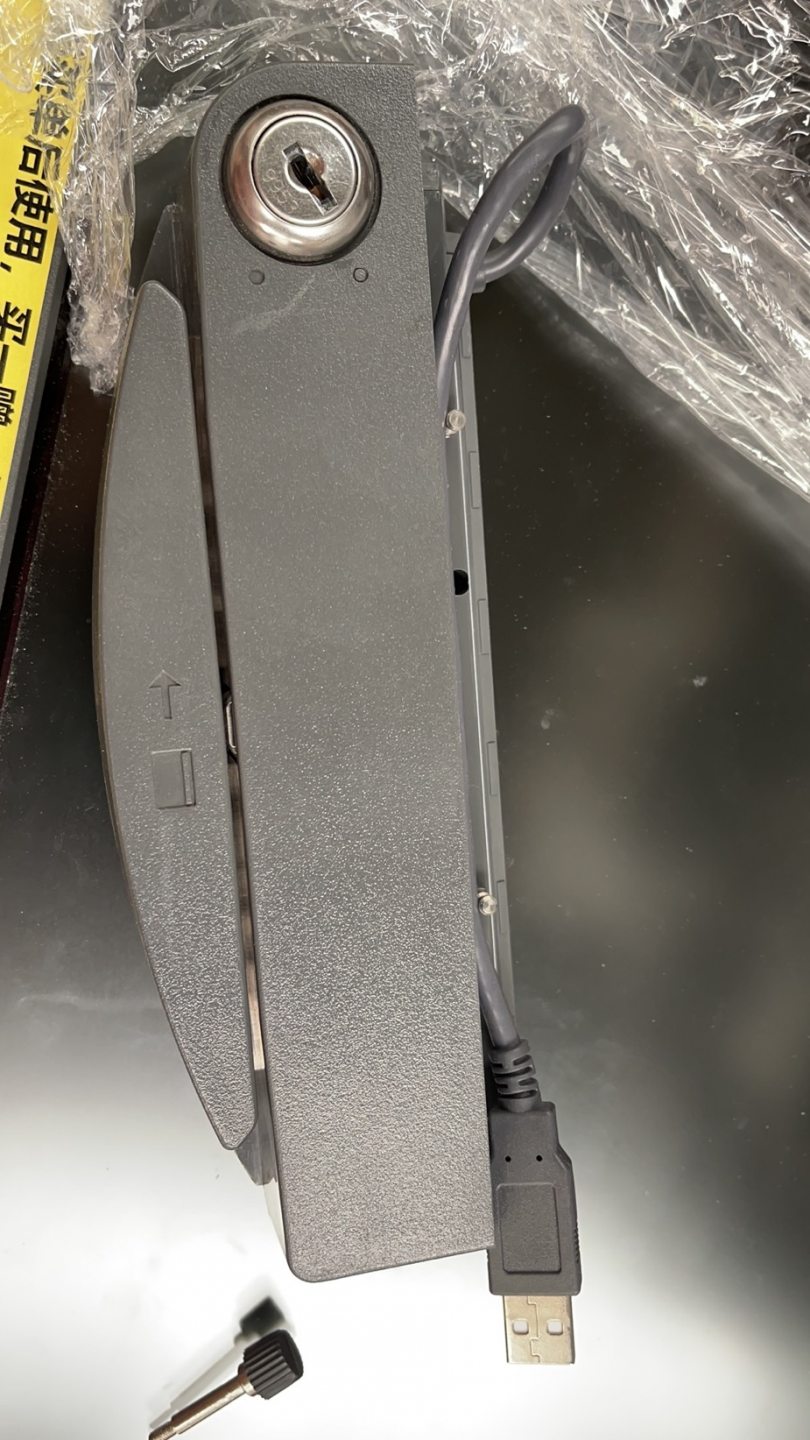
| Brand fit | Some terminals (Elo, NCR, etc.) take a model-specific attached reader | — |
Browse standalone and integrated readers in our card readers & scanners category, and replacement cables in cables & connectors. For motorized ATM-style read heads — a different beast from a hand-swipe POS MSR — see our ATM card reader heads comparison. Tell us your terminal model and required tracks and we’ll match the right reader before you order.
Frequently Asked Questions
My POS card reader stopped reading swipes — what's the first thing to check?
How should I clean a magnetic-stripe reader, and how often?
How do I tell whether it's the card or the reader that's faulty?
Does swipe speed or direction matter?
The reader has power but the POS shows nothing when I swipe — is it the software?
When is the MSR genuinely worn out and due for replacement?
Sources & further reading
Related guides
Cash Drawer Wiring & Connection: RJ11/RJ12 Drawer-Kick, Printer-Driven vs USB, and the 12–24V Pulse
A POS cash drawer doesn't plug into the till — it's kicked open by a 12–24V pulse from the receipt printer down an RJ11/RJ12 cable. Get the interface, pins and voltage right and it just works. Here's the wiring, explained.
Read guide →Noisy or Failing POS Cooling Fan? Diagnose the Bearing, Clean It, and Match a Replacement
A grinding or whining POS fan is usually dust or a worn bearing — and ignored, it leads to overheating and shutdowns. Here's how to find the noisy fan, decide clean-or-replace, and match the right fan.
Read guide →Receipt Printing Faint, Dark, Partial or Streaked? Thermal Print-Quality Troubleshooting (Start With the Self-Test)
Faint, streaked or one-sided receipts almost always trace to a dirty head, the wrong paper, or a density setting — not a dead printer. One self-test print tells you whether the fix is software or hardware. Here's the full routine.
Read guide →Related categories
Featured parts in this guide
%20Sparta%20Riser%20Card/120c399634d85265f7a7595a979407ee_c48b4b186f0a2eea2b86d0d5a86c219e_s-l1600.jpg)
Need the parts mentioned in this guide?
Genuine OEM and quality-tested aftermarket parts for IBM, Toshiba, NCR, Diebold, Wincor and Hyosung systems — with worldwide shipping.