
Impresoras POS matriciales vs térmicas: una comparación de coste total de propiedad para retail y hostelería
Una guía de compra práctica que compara las impresoras de recibos matriciales y térmicas en velocidad, durabilidad, coste del papel, tolerancia al calor en cocina y coste total de propiedad a 5 años. Con matriz de decisión descargable.
La respuesta en 90 segundos
For roughly 90% of front-of-house retail and hospitality, thermal wins on speed, maintenance and noise. For kitchens, multi-part forms, archival receipts and any environment over 60 °C, dot matrix is still the right answer. The question isn't which technology is better in the abstract — it's which one matches your deployment's specific constraints.
| Thermal | Dot Matrix | |
|---|---|---|
| Print speed | 250–300 mm/s | ~3–6 lines/s |
| Noise level | ~50 dB (quiet) | ~60–70 dB (clattery) |
| Multi-part forms | ✗ | ✓ |
| Heat-tolerant receipt | ✗ | ✓ |
| Long-term archival | ✗ | ✓ |
| Maintenance burden | Low | Higher (ribbons) |
| Front-of-house retail fit | Excellent | Acceptable |
| Kitchen-pass fit | Poor (paper darkens at ~70 °C) | Excellent |
Cómo imprime realmente cada tecnología
The two technologies create marks on paper in fundamentally different ways, which is why their durability profiles diverge so sharply.
- Direct thermal printing uses a printhead with thousands of microscopic heating elements. The paper is coated with a leuco dye that turns dark when heated to ~70 °C. No ink, no ribbon, no toner — just heat and chemically active paper.
- Dot matrix (impact) printing uses an array of solenoid-driven pins that strike an inked ribbon against plain paper. The pins fire in dot patterns to form characters and graphics. Ink and paper are decoupled, so paper choice is unconstrained.
Velocidad, ruido y experiencia de usuario
A modern thermal POS printer (Epson TM-T88VII, Star TSP143IV, Bixolon SRP-380) prints at 250–300 mm/sec — about 6–8 standard receipts per second. A high-end dot matrix like the Epson TM-U220 prints at roughly 6 lines per second; a typical 20-line receipt takes 3–4 seconds end-to-end.
That difference compounds at peak. A queue of 10 customers at a busy lunch service experiences a thermal queue as “essentially instant” and a dot matrix queue as “noticeably waiting”. Coffee shops and quick-service retail almost always pick thermal for this reason alone.
Noise matters too. Dot matrix printers in a quiet boutique are conspicuous; in a busy café with espresso machines, less so. Kitchens — already noisy — don't care.
Durabilidad y tolerancia ambiental
The classic field experience: thermal printers are rated for clean, climate-controlled environments and quietly outlast their warranty. Dot matrix printers laugh at dust, heat and abuse but require ribbon changes and occasional pin-cleaning.
| Thermal | Dot Matrix | |
|---|---|---|
| Operating temp range | 0–45 °C | –10 to 50 °C+ |
| Tolerates dust / oil / steam | No (avoid kitchens) | Yes |
| Mean time between failures (typical) | ~360,000 lines | ~30 million lines (mechanism) |
| Printhead lifespan | 50–150 km of paper | 200–400 million characters |
| Receipt fades over time | Yes (months) | No (years) |
| Multi-part carbonless forms | ✗ | ✓ (up to 5 ply) |
Coste total de propiedad a 5 años
Headline price tags miss the real story. The cost-of-ownership analysis below assumes a typical retail station printing ~150 receipts per day, six days a week, for five years (≈ 234,000 receipts).
| Thermal (Epson TM-T88VII) | Dot Matrix (Epson TM-U220) | |
|---|---|---|
| Hardware (USD) | ~ $400 | ~ $300 |
| Paper, 5 years (~ 800 rolls) | ~ $400 (thermal rolls) | ~ $160 (plain paper) |
| Ribbons / consumables, 5 years | — | ~ $150 (ribbons every 4M chars) |
| Printhead replacement (1 cycle) | ~ $80 | ~ $120 |
| Cleaning supplies & labour | ~ $50 | ~ $100 (more frequent) |
| 5-year total | ~ $930 | ~ $830 |
| Cost per receipt | ~ $0.0040 | ~ $0.0035 |
The headline lesson: at typical retail volumes, the per-receipt cost difference is small (~ 12%). Thermal wins on speed, noise and operational simplicity; dot matrix wins narrowly on raw cost and on every non-cost factor that matters in kitchens.
Matriz de decisión por tipo de despliegue
| Best fit | Why | |
|---|---|---|
| Front-of-house retail (clothing, electronics, gift) | Thermal | Speed at peak; quiet; minimal maintenance |
| Café / coffee bar (front counter) | Thermal | Speed; receipt aesthetics; low noise |
| Restaurant kitchen / pass / line | Dot matrix | Heat tolerance; oil-splash resistance; durable |
| Pharmacy / drugstore | Thermal + ledger | Speed for prescriptions; ledger printer for records |
| Auto repair / workshop | Dot matrix | Multi-part work orders; harsh environment |
| Large warehouse / industrial | Dot matrix or thermal-transfer | Long-life labels; multi-part receipts |
| Banking branch / counter receipts | Dot matrix or thermal-transfer | Multi-year archival requirement |
| Pop-up / mobile / market stall | Thermal (mobile, Bluetooth) | Battery-friendly; compact |
Modelos recomendados y piezas de repuesto
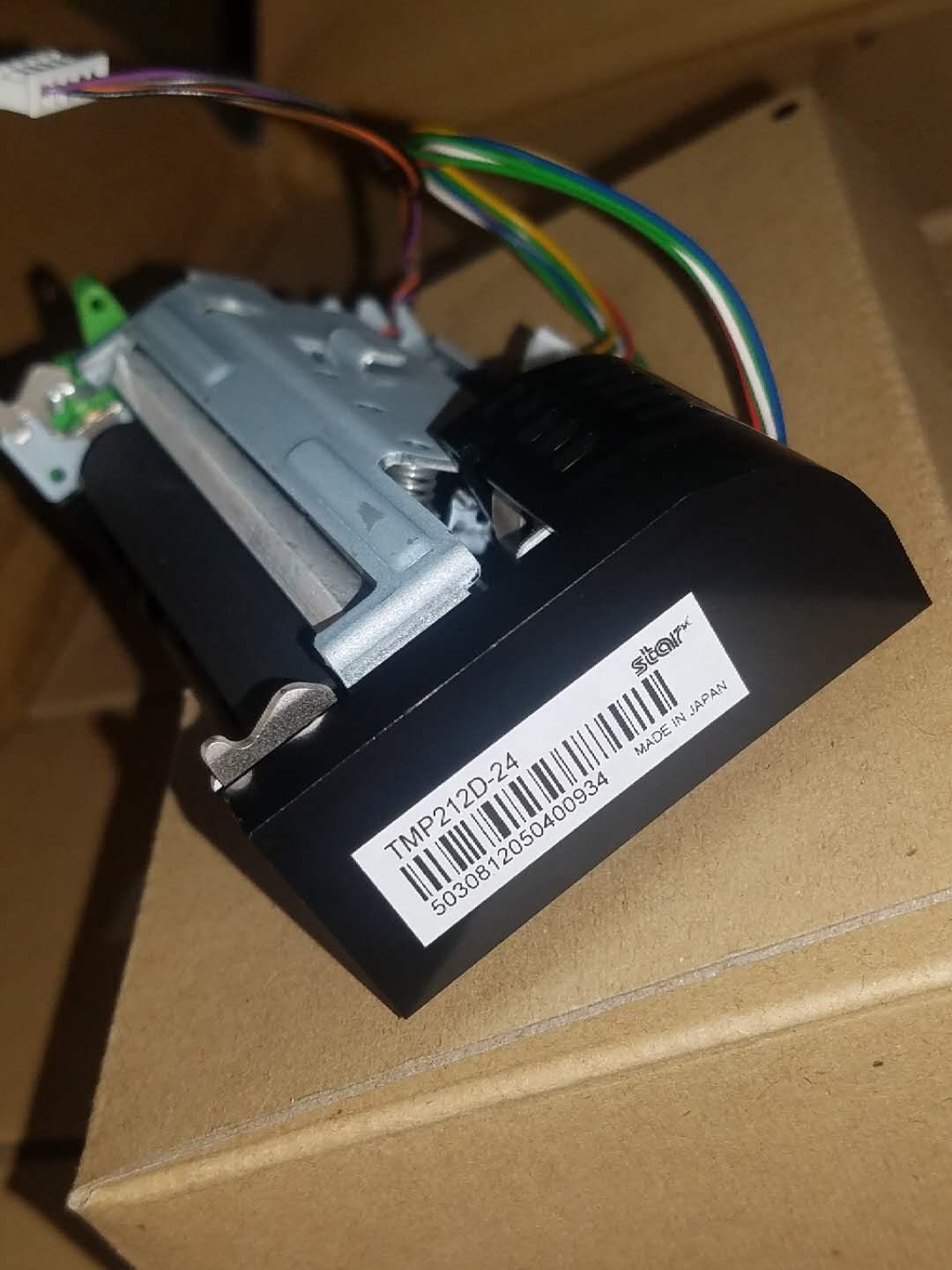
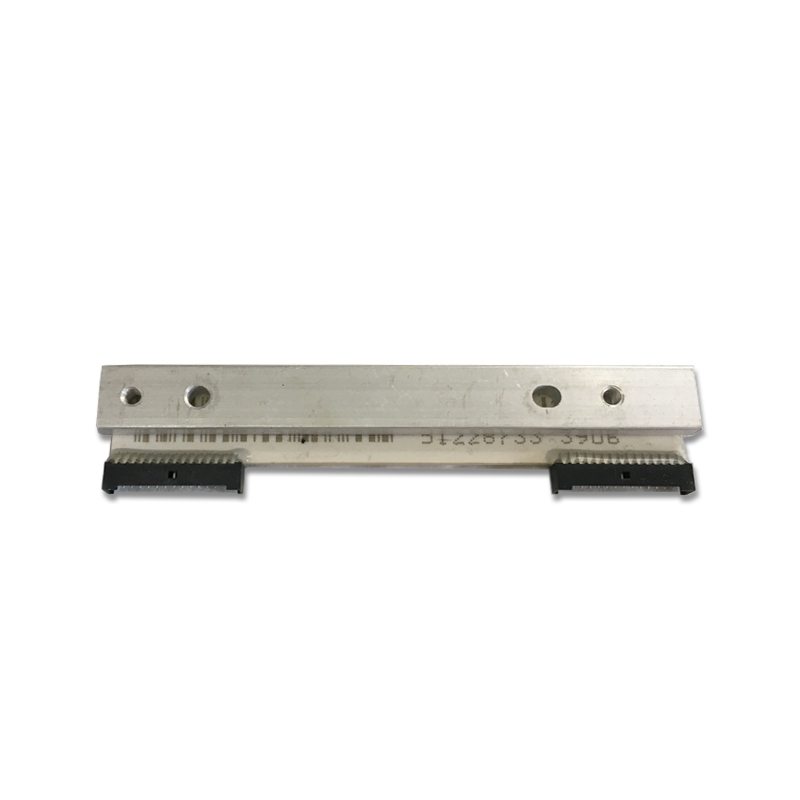
The four printer families below cover ~80% of new SMB POS installs we see and have mature aftermarket parts ecosystems — printheads, platen rollers, cutters and ribbons all readily sourceable from quality aftermarket suppliers worldwide. For legacy IBM 4610 and Toshiba 6145 receipt printers (the workhorse of larger retail), see our dedicated Thermal Printhead Replacement Guide.
| Model | Type | Notes | |
|---|---|---|---|
| Epson TM-T88VII | Thermal | Industry workhorse; near-universal driver support | — |
| Star TSP143IV | Thermal | Network-friendly; popular with cloud POS systems | — |
| Bixolon SRP-380 | Thermal | Fast cutter; competitive aftermarket parts | — |
| Epson TM-U220 | Dot Matrix | The classic kitchen / impact receipt printer | — |
| Star SP742 | Dot Matrix | Auto-cutter, splash-resistant kitchen variant | — |
| Toshiba 6145 / SureMark 4610 | Thermal (POS) | Enterprise retail standard — see linked guide | — |
Preguntas frecuentes
¿Por qué la mayoría de cocinas siguen usando impresoras matriciales?
¿Cuánto más rápida es una impresora térmica de recibos?
¿Es el papel térmico realmente más caro que el papel matricial más cinta?
¿Los recibos térmicos se borran con el tiempo?
¿Y las impresoras de transferencia térmica — dónde encajan?
¿Puedo reemplazar una impresora matricial en mi cocina por un modelo térmico 'apto para cocina'?
Fuentes y lecturas complementarias
- Difference Between a Thermal and Dot-Matrix Printer — Hillside Electronics Corp
- Thermal Printing vs Dot Matrix Printing: Which is Right for Your Business? — Rugtek
- POS Printers: Thermal vs Dot-Matrix — Staples
- Understanding Thermal POS, Dot Matrix and Thermal-Transfer Receipt Printers — HPRT
- Thermal vs Matrix Printer Differences — Logiscenter EU
Guías relacionadas
Tecnologías de pantalla táctil POS comparadas: resistiva vs capacitiva vs SAW vs infrarroja
La capacitiva proyectada se ha vuelto el estándar retail — pero resistiva, SAW e infrarroja ganan cada una en el entorno adecuado. Aquí está cómo difieren de verdad las cuatro tecnologías táctiles POS.
Leer guía →Impresoras de recibos Star Micronics comparadas: TSP100, TSP650, TSP700, TSP800 y la SP700 de impacto
Las líneas de impresoras de recibos de Star van desde una impresora de caja USB económica hasta una máquina de tickets de alta velocidad y una impresora de impacto de cocina resistente al calor. Aquí está la gama comparada, más las piezas que necesitará.
Leer guía →Impresoras de recibos Bixolon comparadas: SRP-350III vs SRP-330III vs SRP-Q300 (y las piezas que se desgastan)
La gama SRP de Bixolon abarca una insignia de alta resistencia, un caballo de batalla de 80 mm económico y un cubo ultracompacto. Aquí está cómo difieren en velocidad y durabilidad — y las piezas que cada una necesita a lo largo de su vida.
Leer guía →Categorías relacionadas
Repuestos destacados
¿Necesita las piezas mencionadas en esta guía?
Piezas OEM originales y alternativas probadas en fábrica para sistemas IBM, Toshiba, NCR, Diebold, Wincor y Hyosung — con envío mundial.