
Sourcing global de piezas POS y ATM: cómo evaluar proveedores, comparar OEM vs aftermarket y evitar el riesgo de falsificación
Un manual para compradores de talleres de reparación e ISOs que abastecen piezas POS y ATM internacionalmente — evaluación de proveedores, compromisos OEM vs aftermarket de calidad, seguridad de pago y las señales de alerta de riesgo de falsificación.
El panorama global de piezas POS
The aftermarket for POS and ATM replacement parts is bigger than most operators realise — well over USD 2 billion globally — and structurally fragmented across three buyer types: in-house repair teams at large retailers, independent service organisations (ISOs) servicing dozens of accounts, and break-fix shops handling one-off jobs. The supply side is even more fragmented: OEM authorised channels, tier-1 aftermarket manufacturers, gray-market remanufacturers, and an ocean of unbranded resellers.
The cost spread between “buy from the OEM’s authorised distributor” and “source globally from a vetted aftermarket supplier” is typically 40–70% on commodity parts (printheads, card-reader heads, keyboard PCBs, cables) and 10–25% on board-level parts. The challenge isn't finding cheaper parts — it's finding cheaper parts that are real, work, and come with warranty backing.
OEM vs aftermarket: cuándo cada uno es la decisión correcta
| OEM (genuine) | Quality aftermarket | No-name aftermarket | |
|---|---|---|---|
| Price vs OEM list | 100% | 30–60% | 10–25% |
| Warranty (typical) | 12+ months | 6–12 months | 0–3 months or none |
| Spec disclosure | Full | Full | Often missing |
| Counterfeit risk | Negligible | Low (with vetted supplier) | High |
| Best for | Critical / under-warranty fleets, banks | Bread-and-butter SMB & ISO repairs | Hobbyists; one-shot repairs you can re-do |
| Returns / dispute support | Strong | Reasonable with reputable suppliers | Often non-existent |
Lista de evaluación de proveedores
A new supplier is high-risk by default. The 8-point screen below catches roughly 90% of bad suppliers without requiring a factory visit:
- Years in business and verifiable physical address. Search the company name in the relevant business registry. A real address with a real phone line eliminates fly-by-night operators.
- Specialisation depth. A supplier listing 3 product categories you care about and nothing else is more reliable than a generalist listing 50 categories on Alibaba.
- OEM cross-reference disclosure. Quality suppliers publish which OEM part numbers their aftermarket replaces. If you have to ask, the supplier should answer in the same business day.
- Resistance / coercivity / dot-density specs in writing. The supplier's catalogue should list these as part of the listing, not on request.
- Warranty terms in writing. 6–12 months is the industry standard for quality aftermarket. “Sold as-is” or “no returns” is a hard no.
- Reference customers. Ask for two service-organisation references in your region. Most reputable suppliers can provide them under NDA.
- Sample order policy. Reasonable suppliers will sell you 1–5 of any item for evaluation before a bulk order. “Minimum order 100 units” on a first transaction is a red flag.
- Communication responsiveness. Two-business-day response with substantive technical answers is the floor. Slower or vaguer = future support problems.
Señales de alerta de falsificación o estafa
- Photos that don't match the description. Stock photos from the OEM on a listing for an aftermarket part. The supplier doesn't have its own product samples.
- Resistance / coercivity values way outside OEM spec. A printhead advertised at 600 Ω when the OEM spec is 950 Ω will print badly and burn out fast.
- Pricing that is wildly below market. 70%+ off OEM is plausible for quality aftermarket. 95% off is counterfeit territory.
- Payment to a personal account. Real suppliers have a corporate bank account in the company name. Personal-account wire = scam-prone.
- No technical conversation possible. If the supplier can't discuss ESD safety, head resistance, or compatibility nuances, they're a reseller of something they don't understand — and probably can't honour warranty claims.
- OEM hologram “included” on aftermarket parts. Real aftermarket parts are honestly labelled. A counterfeit OEM hologram is a federal offence in many jurisdictions and the supplier knows it.
Pago, Incoterms y logística de importación
| Payment method | When to use | Buyer protection | |
|---|---|---|---|
| Credit card via supplier checkout | Orders < USD 1,000 | Strong (60–120 day chargeback window) | — |
| PayPal Goods & Services | Orders < USD 5,000 | Strong (180-day dispute window) | — |
| Trade Assurance (Alibaba) | First several mid-volume orders | Escrow with platform mediation | — |
| Letter of Credit (LC) | First USD 10,000+ order | Bank-mediated escrow; expensive setup | — |
| T/T (telegraphic transfer) | Established suppliers only | None; rely on supplier reputation | — |
On Incoterms (the standardised shipping responsibility codes maintained by the ICC), three are worth knowing:
- EXW (Ex Works) — supplier hands you the goods at their door. You arrange everything. Lowest unit cost, highest logistics burden. Use only with a qualified freight forwarder.
- FOB (Free On Board) — supplier handles export, you handle import. Standard for sea freight from Asia. The most common middle ground.
- DDP (Delivered Duty Paid) — supplier handles everything including import duties to your door. Highest unit cost, zero hassle. Best for low-volume, high-urgency orders.
Garantía, devoluciones y resolución de disputas
- 1
Document on receipt
Photograph the packaging, the part itself, the printed part number and (where applicable) the resistance reading. Keep the supplier's invoice and packing list with the photos. This is your evidence pack if a dispute arises. - 2
Test before installing in production
Bench-test the part. For printheads, run a 50-receipt density test. For card reader heads, run the operator-mode read test on a known-good card. Catch duds before they cost a customer outage. - 3
Report defects within the supplier's warranty window
Most quality suppliers honour 6–12 month warranties on legitimate failures. Submit the failure with your receipt-of-delivery photos and the failure-mode evidence. Reputable suppliers refund or replace promptly. - 4
Escalate via your payment method if the supplier stalls
PayPal G&S: 180-day dispute window. Credit card: 60–120 days (jurisdiction-dependent). Trade Assurance: file with the platform. Bank LC: reach out to your bank's trade-finance team. - 5
Document and re-source if the supplier fails twice
One bad batch from a long-term supplier is forgivable; two means it's time to qualify the backup you should already have on file.
Escalado: del pedido puntual al stock en consignación
As your repair volume grows, the procurement model evolves. The progression most ISOs follow:
- Stage 1 — Job-by-job sourcing. Quote each repair, order parts on demand. Margins are modest; lead times hurt. Acceptable for < 5 jobs per week.
- Stage 2 — Bench inventory. Stock the top 10–20 SKUs you swap most often. Cuts lead time to zero on those jobs and lets you charge a premium for same-day service.
- Stage 3 — Quarterly bulk orders. Combine bench-inventory replenishment with a quarterly forecast for slower-moving parts. Locks in price and secures supply.
- Stage 4 — Consignment / VMI (vendor-managed inventory). The supplier holds stock at your facility (or near it) and you pay only when you draw it. Common with established supplier relationships at six-figure annual spend.
Preguntas frecuentes
¿Cuánto puedo ahorrar realmente abasteciendo piezas POS aftermarket globalmente?
¿Es 'OEM' lo mismo que 'genuino'?
¿Cuál es la forma más segura de pagar a un proveedor extranjero en el primer pedido?
¿Cómo identifico un cabezal térmico falsificado antes de instalarlo?
¿Debo abastecerme de un solo proveedor o de varios?
¿Cómo gestiono reclamaciones de garantía con un proveedor extranjero?
Fuentes y lecturas complementarias
- Smart Global Sourcing for OEMs: Cut Costs, Avoid Tariffs, Improve TCO — Component Solutions Group
- A Guide to Parts Manufacturer, Distributor and Wholesaler — ZF Aftermarket
- Top Tips for Choosing the Right OEM Supplier — PolyGel
- Global Sourcing of Industrial Parts at Competitive Prices — Mechanical Power Inc
- Incoterms 2020 — official rule set — International Chamber of Commerce
Guías relacionadas
Reemplazo del teclado PIN (EPP) del cajero: sabotaje, cumplimiento PCI PTS, inyección de claves y elegir la pieza correcta
El teclado PIN del cajero es la pieza más regida por la seguridad de la máquina. Reemplazarlo no es solo un cambio — son reglas de sabotaje, cumplimiento PCI PTS y claves que solo una parte autorizada puede inyectar. Aquí está lo que eso significa en la práctica.
Leer guía →Impresoras de recibos NCR RealPOS: identifica tu modelo y pide el cabezal, cortador y piezas correctos
Pedir piezas NCR RealPOS falla en un punto: el cabezal viene en versiones de 9 pines y 15 pines que se parecen y no son intercambiables. Aquí está cómo leer tu número de modelo y acertar la pieza exacta.
Leer guía →Piezas POS Wincor Nixdorf / Diebold Nixdorf: identifica tu BEETLE e impresora serie TH y pide la pieza correcta
Los sistemas BEETLE de Wincor Nixdorf (ahora Diebold Nixdorf) están por todas partes en el retail europeo. La clave para pedir piezas es el esquema de números 1750 — aquí está cómo leerlo y acertar la pieza correcta de la serie TH.
Leer guía →Categorías relacionadas
Repuestos destacados

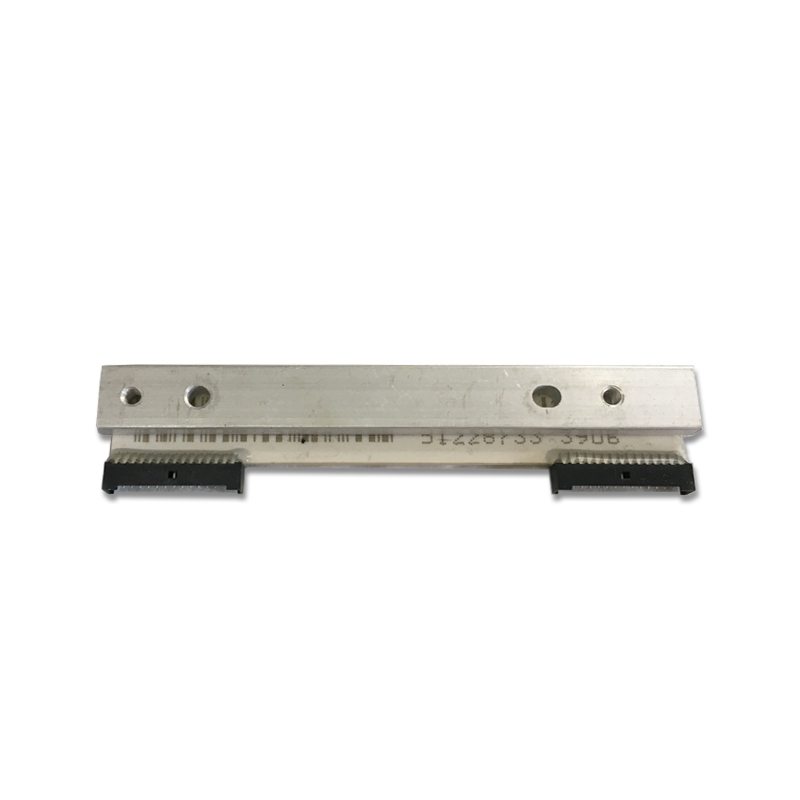
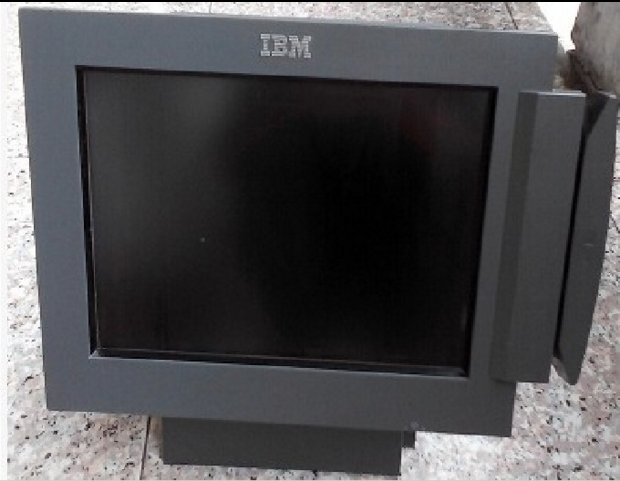
¿Necesita las piezas mencionadas en esta guía?
Piezas OEM originales y alternativas probadas en fábrica para sistemas IBM, Toshiba, NCR, Diebold, Wincor y Hyosung — con envío mundial.