
Reemplazo del teclado PIN (EPP) del cajero: sabotaje, cumplimiento PCI PTS, inyección de claves y elegir la pieza correcta
Una guía para operadores del teclado PIN cifrante (EPP) del cajero — cómo asegura el PIN, por qué un EPP saboteado borra sus claves y se detiene, cumplimiento PCI PTS y TR-31, por qué las claves deben inyectarse por una parte autorizada, y elegir un reemplazo.
La respuesta rápida (y la única regla dura)
The ATM PIN pad isn’t a keypad — it’s an EPP (Encrypting PIN Pad), the most security-governed part on the machine. It encrypts the PIN inside a tamper-protected module, it’s certified to PCI PTS, and it only works once cryptographic keys are loaded. That makes replacement a compliance job, not a swap:
| Reality | What it means | |
|---|---|---|
| It encrypts the PIN internally | The PIN is never plaintext outside the EPP | — |
| It's tamper-responsive | Opening/removing it zeroizes the keys — it stops working | — |
| It must be PCI PTS certified | Match a currently-valid approval level (e.g. PCI PTS 5.x) | — |
| It needs keys injected | A new EPP can't process PINs until an authorized party loads keys | — |
Cómo asegura el PIN un EPP
An EPP exists to keep the customer’s PIN secret end-to-end. The digits never leave the module in the clear: the EPP encrypts them with keys held inside its secure boundary and outputs only ciphertext. To protect those keys, the module is tamper-responsive — it actively watches for intrusion and erases its secrets if attacked.
Por qué hay que reemplazar un EPP
EPPs get replaced for three reasons — and only one of them is a conventional hardware fault:
| Reason | What's happening | |
|---|---|---|
| Tamper / zeroized | Detected intrusion or removal erased the keys; reports a tamper error | — |
| Hardware failure | Dead keys, controller or connector — a genuine fault | — |
| Compliance / end-of-life | Its PCI PTS approval lapsed or it can't meet current key-block rules | — |
Cumplimiento PCI PTS y de bloques de claves
Two compliance threads decide whether an EPP is acceptable: its device certification(PCI PTS) and the key-management standard (key blocks) it must support.
| Requirement | What to know | |
|---|---|---|
| PCI PTS certification | Devices are approved to a version; current generation is PCI PTS 5.x (6.x emerging) | — |
| Approval expiry | Older PTS approvals lapse — don't deploy a lapsed EPP | — |
| TR-31 key blocks | Secure key packaging; ATMs required to use compliant key blocks (TR-31 'Phase 3') from 1 Jan 2025 | — |
| Your processor's minimum | Your acquirer/processor states the minimum PTS level & key-block rule they accept | — |
Reemplazo e inyección de claves (solo autorizado)
The replacement workflow keeps the physical and the cryptographic strictly separate — you (or your technician) handle the part; an authorized party handles the keys:
- 1
Confirm why it's being replaced
Tamper/zeroized, hardware failure, or compliance/EOL — this sets whether you need the same model or a higher PCI PTS level. - 2
Match model + certification
Choose an EPP for your exact ATM model, at a currently-valid PCI PTS level your processor accepts, with the right layout and connector. - 3
Fit the EPP (per procedure)
Install it following the ATM’s documented procedure and your dual-control/ security rules for opening the machine.Caution: Mishandling can trip the new unit's tamper response — follow the documented fitting procedure exactly. - 4
Have keys injected by an authorized party
Your authorized key-loading facility injects the required keys — by local key loading or remote key loading (RKL) — under your processor’s and the scheme’s procedures. The EPP can’t process PINs until this is done. - 5
Verify and return to service
Confirm PIN encryption and a successful test transaction with your processor, verify compliance status, then return the ATM to live operation.
Hacer coincidir la pieza y abastecerla
When you source a replacement, the supplier’s job is the part-and-certification fit; the keys are never part of the shipment:
| Match this | How | |
|---|---|---|
| ATM make / model | The EPP is model-specific — quote the exact machine | — |
| PCI PTS level | A currently-valid approval your processor accepts | — |
| Layout & connector | Physical fit, key layout and interface for your model | — |
| Key-injection plan | Local vs remote (RKL), arranged with your authorized party | — |
| Compliance horizon | Prefer a level that stays valid, given approval expiries | — |
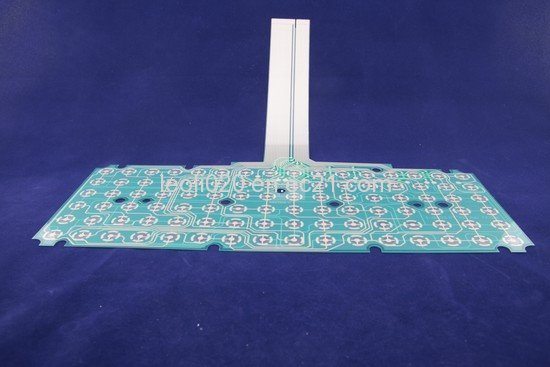
Browse PIN pads and keypads in our keyboards category, and related modules in terminal repair parts and other parts. For other ATM peripherals see our ATM card reader heads and cash dispenser guides. Tell us your ATM model and the PCI PTS level your processor requires, and we’ll match a compatible EPP — your processor and authorized key-loading party handle the keys.
Preguntas frecuentes
¿Qué es un EPP de cajero y en qué se diferencia de un teclado normal?
¿Por qué mi EPP dejó de funcionar tras abrirlo o moverlo?
¿Puedo solo poner un EPP nuevo y arrancar?
¿Qué es PCI PTS y qué nivel necesito?
¿Qué son los bloques de claves TR-31 y de qué va el plazo de 2025?
¿Cómo me aseguro de que un EPP de reemplazo funcione en mi cajero?
Fuentes y lecturas complementarias
- Encrypting PIN Pad (EPP) Security Requirements — PCI Security Standards Council
- PCI PTS PIN Security Requirements & Technical FAQs — PCI SSC (via Kiosk Industry)
- ATM Keypad Encryption PCI Compliance Updates — ATM Depot
- Terminal and PIN Entry Security Standards FAQs — Mastercard
- The PCI PTS 5.x Generation of Encrypting PIN Pads — Cryptera
Guías relacionadas
Impresoras de recibos NCR RealPOS: identifica tu modelo y pide el cabezal, cortador y piezas correctos
Pedir piezas NCR RealPOS falla en un punto: el cabezal viene en versiones de 9 pines y 15 pines que se parecen y no son intercambiables. Aquí está cómo leer tu número de modelo y acertar la pieza exacta.
Leer guía →Piezas POS Wincor Nixdorf / Diebold Nixdorf: identifica tu BEETLE e impresora serie TH y pide la pieza correcta
Los sistemas BEETLE de Wincor Nixdorf (ahora Diebold Nixdorf) están por todas partes en el retail europeo. La clave para pedir piezas es el esquema de números 1750 — aquí está cómo leerlo y acertar la pieza correcta de la serie TH.
Leer guía →Impresoras POS Fujitsu (FP-1000 / FP-510): identifica tu modelo, lee el esquema KA02066, pide la pieza correcta
La FP-1000 de Fujitsu es un tanque de impresora de recibos — pero pedir piezas significa descifrar el esquema de configuración KA02066. Aquí está cómo leerlo y hacer coincidir cabezal y cortador con tu build exacto.
Leer guía →Categorías relacionadas
Repuestos destacados
%20Sparta%20Riser%20Card/120c399634d85265f7a7595a979407ee_c48b4b186f0a2eea2b86d0d5a86c219e_s-l1600.jpg)
¿Necesita las piezas mencionadas en esta guía?
Piezas OEM originales y alternativas probadas en fábrica para sistemas IBM, Toshiba, NCR, Diebold, Wincor y Hyosung — con envío mundial.