
Ticket pâle, foncé, partiel ou strié ? Dépannage de la qualité d'impression thermique (commencez par l'autotest)
Un guide de réparation des défauts de qualité d'impression de tickets thermiques — impressions pâles ou claires, lignes blanches verticales, impression unilatérale/partielle et sortie trop foncée. Utilisez l'autotest pour séparer logiciel et matériel, nettoyez la tête et le rouleau, réglez la densité, et sachez quand la tête est usée.
Le tri rapide
Faint, streaked, one-sided or over-dark receipts look like a failing printer, but the cause is almost always a dirty head, the wrong paper, or a density setting — all cheap to fix. The single most useful move is to print a self-test: it tells you instantly whether the problem is in software or in hardware. Triage in this order:
| Do this | What it tells you | |
|---|---|---|
| 1. Print a self-test | Self-test crisp but POS faint = software density | — |
| 2. Clean head + platen (alcohol, power off) | Removes residue that insulates the head | — |
| 3. Check paper side & grade | Wrong side / low-sensitivity stock prints faint | — |
| 4. Raise density, lower speed a touch | Darkens output cleanly | — |
| 5. Replace worn head or platen | When a sharp white line or fade survives cleaning | — |
Ce qui rend une marque thermique foncée
A thermal mark is just heat applied to coated paper — so darkness depends on a short chain of factors. When a receipt prints faint, one of these links is weak:
Lire le symptôme de qualité d'impression
Match the exact print-quality symptom to point at the cause:
| Symptom | Most likely cause | |
|---|---|---|
| Faint / light all over | Dirty head/platen, low density, or wrong paper | — |
| Vertical white line down the page | Debris on head or uneven platen; if it survives cleaning, a burned-out dot row | — |
| Strong one edge, fades across width | Uneven head-to-platen pressure; worn platen roller | — |
| Blank / nothing prints | Paper loaded upside-down (non-thermal side up) | — |
| Too dark, smudged, bleeding | Density too high / speed too low / over-sensitive paper | — |
| Dead block of dots | Printhead damage — replace the head | — |
L'autotest : logiciel vs matériel
Because it routes the entire repair, the self-test deserves its own step. Read the result like this:
| Self-test result | Meaning | Where to fix | |
|---|---|---|---|
| Crisp & dark; POS receipts faint | Hardware fine | Raise print darkness/density in driver or POS | — |
| Faint or light | Hardware / consumable | Clean head & platen; check paper; then parts | — |
| Vertical white line | Head contact or dot row | Clean; if it persists, replace head | — |
| One-sided fade | Pressure / platen | Reseat head; inspect/replace platen roller | — |
Pas à pas : restaurer la qualité d'impression
Work the sequence in order — each step is cheaper and more likely than the next:
- 1
Print the self-test
Hold Feed while powering on. A crisp self-test points you at software density; a faint one points at hardware/consumables. - 2
Clean the head and platen
Power off, then wipe the thermal head and the platen roller with isopropyl alcohol on a lint-free swab. Residue insulating the head is the No. 1 cause of faint print.Caution: Always power off before touching the head; let it dry fully before printing. - 3
Confirm the paper
Make sure the thermal (coated) side faces the head and the stock matches the printer. A roll loaded upside-down prints nothing; low-sensitivity paper prints faint. - 4
Tune density and speed
Raise the print-density/darkness value and reduce speed slightly for darker, solid text. For smudging, do the opposite — lower density, raise speed. - 5
Replace the worn part
If a sharp white line, dead dot block, or fade survives all of the above, replace the printhead (or the platen roller for one-sided fade).
Quand c'est une pièce usée
When cleaning and settings can’t cure it, the part has worn. Match the replacement to your printer:
| Part | Symptom that points to it | |
|---|---|---|
| Thermal printhead | Sharp white line or dead dot block that survives cleaning | — |
| Platen roller | One-sided fade, uneven pressure, flats on the roller | — |
| Thermal paper (right grade) | Faint everywhere despite a clean head and high density | — |
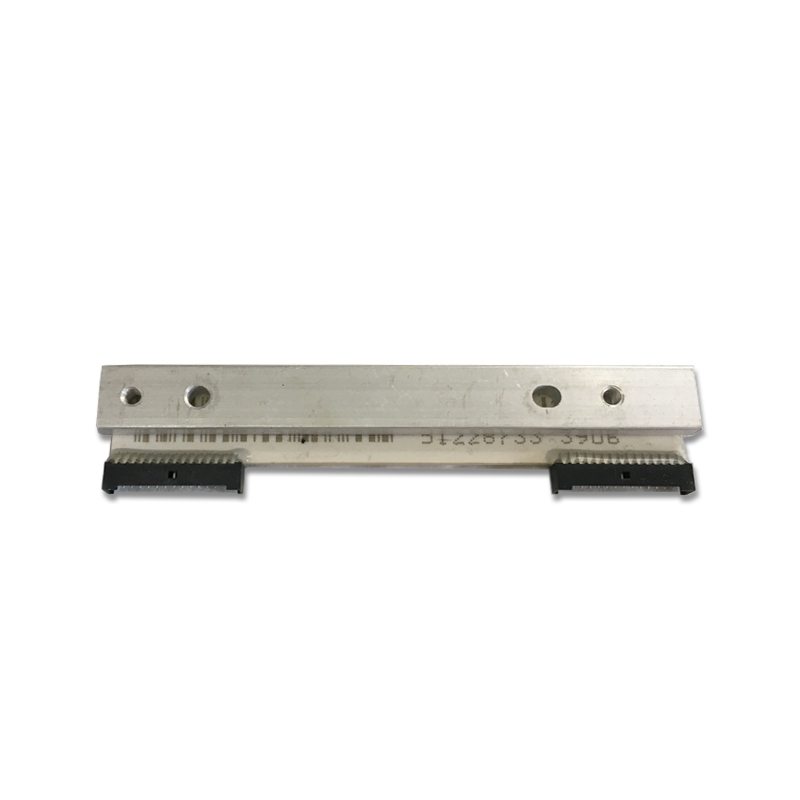
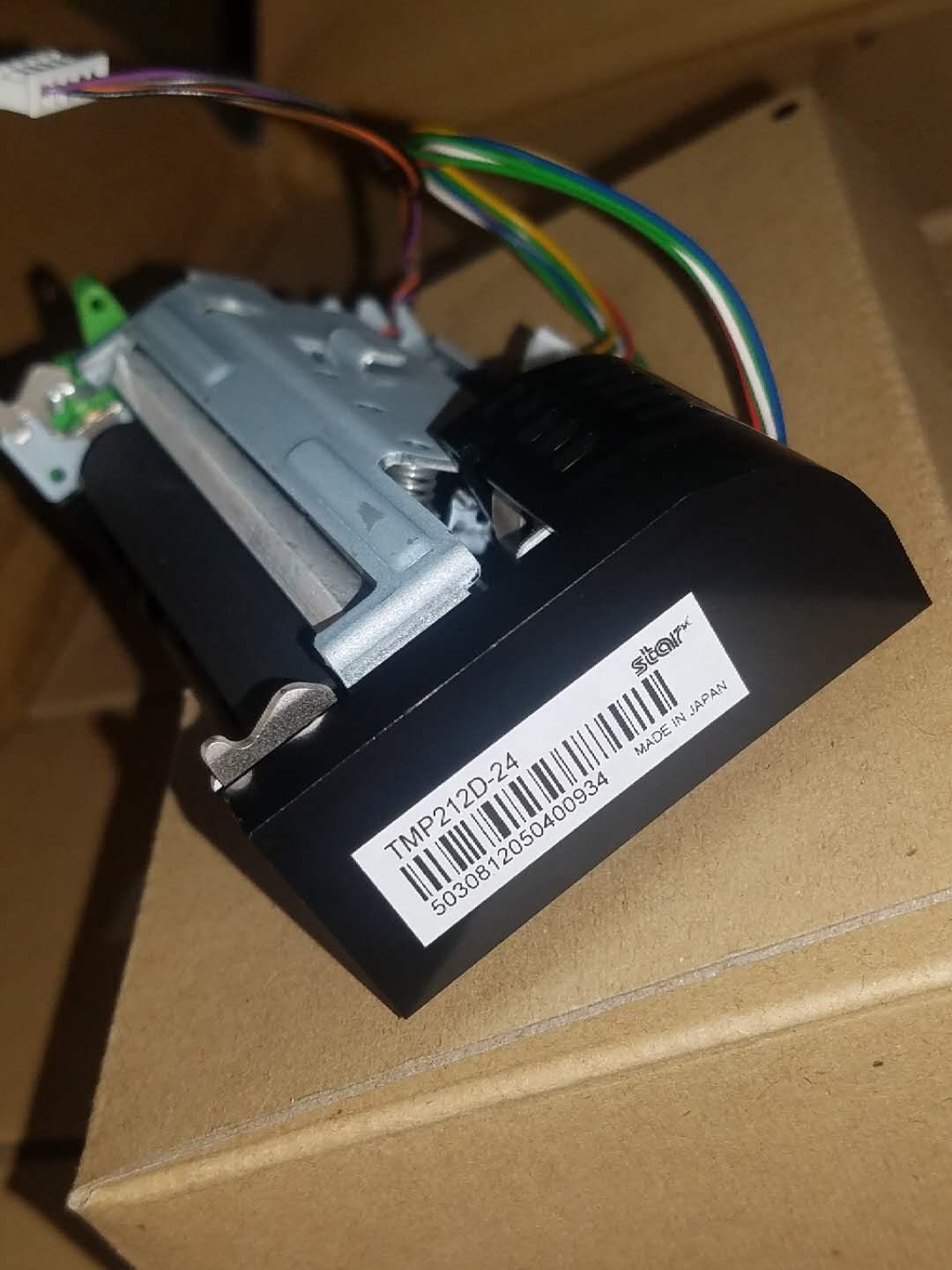
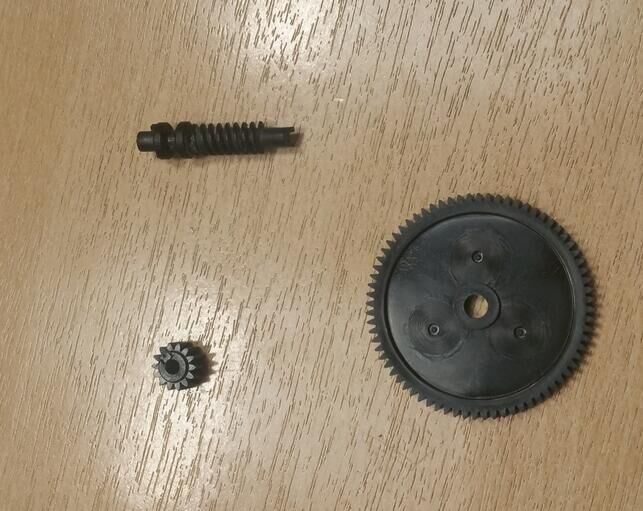
Browse replacements in our thermal print heads category, rollers & cutter parts, and full units in POS printers. For printhead replacement steps see our printhead replacement guide and to make heads last, our printhead lifespan guide. If the printer won’t print at all or has feed/connection faults, start with the general receipt-printer troubleshooting guide. Send us your printer model and a photo of the self-test and we’ll match the right head or roller.
Questions fréquentes
Pourquoi mon imprimante de tickets thermiques imprime-t-elle pâle ou clair ?
Que m'apprend l'autotest ?
Qu'est-ce qui cause des lignes blanches verticales sur le ticket ?
Un seul côté du ticket s'imprime, ou il pâlit sur la largeur — pourquoi ?
Mes tickets impriment trop foncé ou bavent — comment corriger ?
Comment savoir si la tête est usée plutôt que sale ?
Sources & lectures complémentaires
Guides associés
Câblage et connexion du tiroir-caisse : drawer-kick RJ11/RJ12, piloté par imprimante vs USB, et l'impulsion 12–24V
Un tiroir-caisse POS ne se branche pas sur la caisse — il est ouvert par une impulsion 12–24V de l'imprimante de tickets via un câble RJ11/RJ12. Interface, broches et tension correctes, et ça marche.
Lire le guide →Ventilateur POS bruyant ou défaillant ? Diagnostiquer le roulement, le nettoyer et choisir un remplacement
Un ventilateur POS qui grince ou siffle, c'est généralement de la poussière ou un roulement usé — ignoré, cela mène à la surchauffe et aux arrêts. Voici comment trouver le ventilateur bruyant, décider nettoyer-ou-remplacer, et choisir le bon.
Lire le guide →Panne de carte mère POS : pas d'alimentation, pas de POST, condensateurs gonflés — diagnostiquer avant de remplacer
Avant de condamner une carte mère POS, prouvez que c'est la carte et non l'alimentation, la RAM ou une pile bouton morte. Une inspection visuelle de deux minutes plus les bips POST le dit généralement — voici la méthode.
Lire le guide →Catégories associées
Pièces en vedette
Besoin des pièces mentionnées dans ce guide ?
Pièces OEM d'origine et alternatives testées en usine pour les systèmes IBM, Toshiba, NCR, Diebold, Wincor et Hyosung — avec expédition mondiale.