
Barcode-Scanner liest nicht? Fehlersuche, Werksreset und Auswahl eines Ersatzgeräts
Ein Praxisleitfaden für einen POS-Barcode-Scanner, der nicht liest — Laser vs. CCD vs. 2D-Imager, eine Reinigen-Abstand-Symbologie-Reset-Abfolge, ein schlechtes Etikett von einem schlechten Scanner unterscheiden, und Auswahl eines Ersatzgeräts nach Scan-Typ und Schnittstelle.
Die schnelle Erstdiagnose
A scanner that won’t read almost never has a dead scan engine. The aimer lighting up proves it has power, which points the fault at the optics or the configuration. In the field the order of likelihood is: a dirty or scratched window first, a disabled symbology or scrambled config second, a connection/interface issue third, and a worn scan engine a distant fourth. Run this triage first:
| Do this | What it rules out | |
|---|---|---|
| 1. Clean the scan window | Dust, smudges and scratches — the #1 cause of read failures | — |
| 2. Check distance, angle and the right code type | A 1D laser can't read a 2D/QR code at all | — |
| 3. Scan the factory-reset barcode | Clears disabled symbologies, prefixes and pairing glitches | — |
| 4. Test the connection in Notepad | Proves whether it's the scanner, the cable, or the POS field | — |
| 5. Replace the scanner | Only if a clean, reset, connected unit still won't read | — |
Scanner-Typen: Laser, CCD und 2D-Imager
Before you diagnose, know which scanner you have — it determines what it canread and what replacement you need. Three technologies dominate retail:
| Laser (1D) | CCD / LED (1D) | Area imager (2D) | |
|---|---|---|---|
| Reads 1D barcodes | ✓ | ✓ | ✓ |
| Reads 2D / QR / Data Matrix | ✗ | ✗ | ✓ |
| Reads from a phone screen | ✗ (poor) | ✗ (poor) | ✓ |
| Best range | Longer | Short / near-contact | Short–medium |
| Moving-part wear | Yes (oscillating mirror) | No | No |
| Typical use | General retail 1D | Budget / near-contact | Modern POS, mobile pay |
Das Symptom lesen
The pattern of failure narrows the cause before you reach for a tool:
| Symptom | Most likely cause | |
|---|---|---|
| No aimer light, fully dead | Power/USB cable, port, or (wireless) flat battery | — |
| Aimer on, reads nothing | Dirty window, or config/symbology disabled | — |
| Reads 1D but not QR/2D | Wrong scanner type — needs a 2D imager | — |
| Reads some labels, not others | Poor label print/contrast, or specific symbology off | — |
| Beeps but POS shows nothing | Interface mode / focus — test in Notepad | — |
| Slow, needs many tries | Scratched window or a worn scan engine | — |
Schritt für Schritt: reinigen, zurücksetzen, neu verbinden
Work the steps in order and stop as soon as it scans reliably. Each step rules out a class of cause so you never replace a working scanner.
- 1
Clean the window
Wipe the scan window with a soft, lint-free cloth — dry, or lightly dampened with isopropyl alcohol. Check for scratches while you’re there. This alone fixes a large share of degraded scanning. - 2
Check distance, angle and code type
Hold the scanner at its rated working distance, square to the code, and confirm you’re not asking a 1D laser to read a 2D/QR code. Try several known-good barcodes. - 3
Scan the factory-reset barcode
From the scanner’s manual, scan “Restore Factory Defaults.” This re-enables symbologies, clears stray prefix/suffix settings and fixes Bluetooth pairing glitches in one step.Caution: After a reset you may need to re-scan the interface-mode barcode (USB-HID vs USB-COM) your POS expects. - 4
Test the connection in a text field
Open Notepad and scan. Data appears = scanner and cable are fine, so the issue is the POS field/focus. Nothing appears = reseat the USB cable, try another port, and (wireless) recharge and re-pair. - 5
Confirm worn engine, then replace
If a clean, reset, correctly connected scanner still won’t read good codes across multiple tries, the scan engine is worn. Replace it — matching scan type, interface and form factor.
Wenn der Barcode — nicht der Scanner — das Problem ist
Sometimes the scanner is fine and the barcode is the problem. If a scanner reads most codes but balks at specific labels, suspect the label before the hardware:
| Label problem | Why it fails / fix | |
|---|---|---|
| Low contrast / faded print | Scanner can't tell bars from spaces — reprint darker | — |
| No quiet zone (margins) | Bars too close to edge/graphics — leave clear margins | — |
| Wrinkled, curved or shiny | Distorts or reflects — flatten, or use a matte label | — |
| Too small / too dense | Below the scanner's resolution — enlarge the symbol | — |
| Wrong symbology for the scanner | Enable that symbology, or use a 2D imager | — |
| Damaged / partly torn | Missing data — reprint the label | — |
Einen Ersatz-Scanner auswählen
When the engine really is worn, match the replacement on these specs so it drops straight into your lane and reads what you actually scan:
| Spec | How to choose | |
|---|---|---|
| Scan type | 2D imager if you scan QR/phone codes; 1D laser/CCD if strictly retail 1D | — |
| Interface | USB-HID keyboard wedge (most POS), USB-COM, serial, or Bluetooth | — |
| Form factor | Handheld, hands-free presentation stand, or in-counter | — |
| Range & field | Long-range for warehouse/shelf; close-range for counter | — |
| Durability | Drop/IP rating for industrial; standard for clean retail | — |
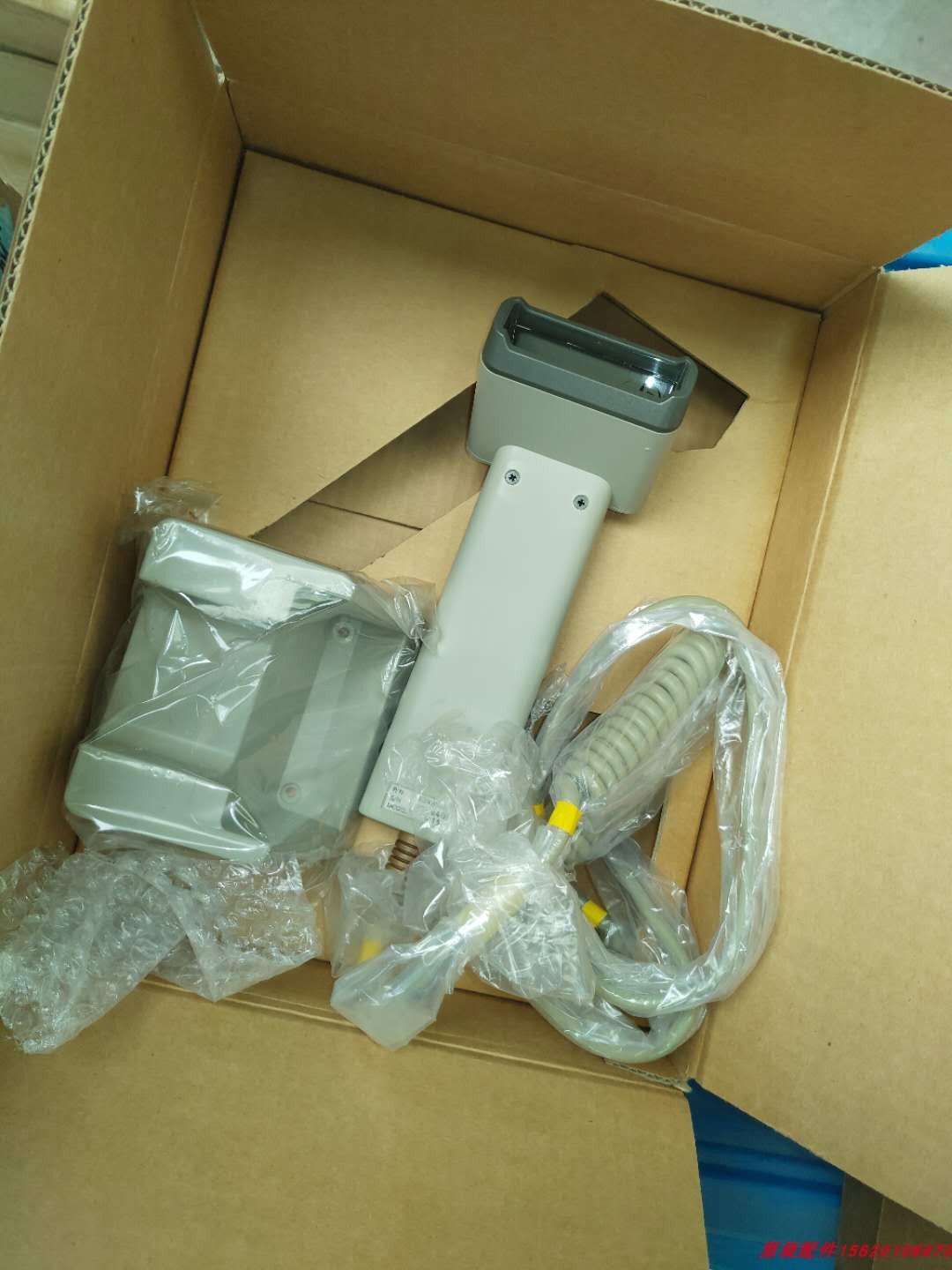
Browse handheld and hands-free scanners in our card readers & scanners category, and replacement cables in cables & connectors. For magnetic-stripe swipe faults — a different device entirely — see our MSR card reader troubleshooting guide. Tell us what codes you scan (1D only, or 2D/QR) and your POS interface, and we’ll match the right scanner before you order.
Häufig gestellte Fragen
Mein Barcode-Scanner leuchtet, liest aber nichts — wo fange ich an?
Warum liest mein Scanner manche Barcodes, aber keine QR-Codes?
Wie setze ich einen Barcode-Scanner auf Werkseinstellungen zurück?
Der Scanner piept beim Scan, aber am POS erscheint nichts — ist es die Software?
Muss das Scan-Fenster wirklich so oft gereinigt werden?
Wann ist der Scanner wirklich verschlissen und reif für den Austausch?
Quellen & weiterführende Literatur
- Barcode Scanner Not Scanning? Common Issues and Easy Fixes — HPRT
- Barcode Scanner Troubleshooting — POS-X
- Barcode Scanner Troubleshooting Guide — Lightspeed Retail
- Why Aren't My Barcodes Scanning? Common Problems & Fixes — Computype
- Troubleshoot Your Barcode Scanner — Square
Verwandte Anleitungen
Kassenschublade verkabeln & anschließen: RJ11/RJ12 Drawer-Kick, druckergesteuert vs USB, und der 12–24V-Impuls
Eine POS-Kassenschublade steckt nicht in der Kasse — sie wird von einem 12–24V-Impuls des Belegdruckers über ein RJ11/RJ12-Kabel aufgestoßen. Schnittstelle, Pins und Spannung richtig, dann funktioniert es.
Anleitung lesen →Lauter oder ausfallender POS-Lüfter? Lager diagnostizieren, reinigen und einen Ersatz treffen
Ein schleifender oder pfeifender POS-Lüfter ist meist Staub oder ein verschlissenes Lager — ignoriert führt es zu Überhitzung und Abschaltungen. So finden Sie den lauten Lüfter, entscheiden reinigen-oder-tauschen und treffen den richtigen.
Anleitung lesen →Beleg druckt blass, dunkel, unvollständig oder streifig? Thermo-Druckqualität beheben (Beginnen Sie mit dem Selbsttest)
Blasse, streifige oder einseitige Belege gehen fast immer auf einen schmutzigen Kopf, falsches Papier oder eine Dichteeinstellung zurück — nicht auf einen toten Drucker. Ein Selbsttest-Druck zeigt, ob die Lösung Software oder Hardware ist.
Anleitung lesen →Verwandte Kategorien
Empfohlene Ersatzteile
%20Sparta%20Riser%20Card/120c399634d85265f7a7595a979407ee_c48b4b186f0a2eea2b86d0d5a86c219e_s-l1600.jpg)
Benötigen Sie die in dieser Anleitung erwähnten Teile?
Originale OEM- und werksgeprüfte Aftermarket-Teile für IBM, Toshiba, NCR, Diebold, Wincor und Hyosung Systeme — mit weltweitem Versand.